
Published July 31, 2026
Late-Summer Energy-Saving Tips to Keep Your Home Cool and Efficient

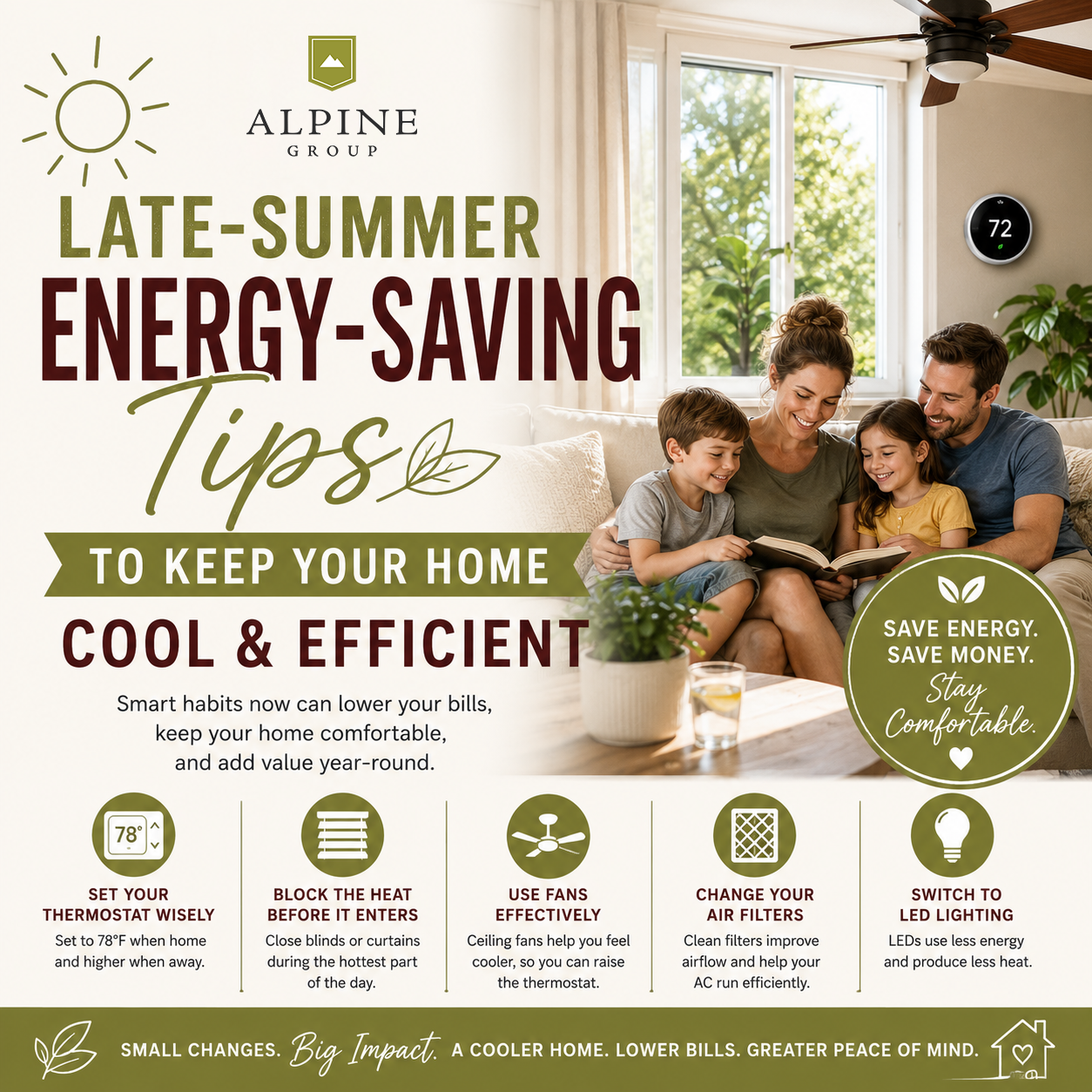
As temperatures peak in August and early September, many homeowners feel the strain, not just from the heat but from rising utility bills. Late summer is one of the most expensive times of year for cooling costs, but with a few smart strategies, you can stay comfortable while keeping your home energy-efficient.
Whether you're a current homeowner, preparing to list your property, or getting ready to buy, these energy-saving tips can improve comfort, reduce expenses, and boost your home's overall value.
Why Late-Summer Energy Efficiency Matters for Homeowners
By the end of summer, air conditioners have been running for months. Systems become less efficient, utility bills climb, and indoor comfort becomes harder to maintain. Improving energy efficiency now not only saves you money, it also increases your home's market appeal.
Buyers increasingly look for homes with lower ongoing costs, modern insulation, and eco-friendly upgrades. Implementing these improvements can boost your property's value and position your home as a smart investment for future buyers.
Optimize Your Cooling System for Maximum Efficiency
1. Change Your Air Filters
Dirty air filters restrict airflow and force your HVAC system to work harder. For optimal performance, replace filters every 30 to 60 days during heavy summer use.
2. Schedule an End-of-Summer Tune-Up
A professional HVAC inspection can:
- Improve cooling efficiency
- Identify worn or failing components
- Extend the lifespan of your system
- Reduce the risk of costly breakdowns during peak heat
This is especially valuable if you plan to sell your home, as a well-maintained HVAC system is a major selling point.
3. Use Smart Thermostat Scheduling
For better efficiency, set your thermostat to:
- 78°F when you're home
- 85°F when you're away
- 2–4 degrees higher while sleeping, if comfortable
Smart thermostats automatically adjust temperatures and can significantly reduce monthly energy costs.
Reduce Heat Gain Inside Your Home
1. Use Heat-Blocking Window Treatments
Late-summer sunshine can dramatically increase indoor temperatures. Help block excess heat by installing:
- Blackout curtains
- Cellular (honeycomb) shades
- UV-blocking window film
These upgrades improve comfort while adding value and style to your home.
2. Seal Gaps and Air Leaks
Even small air leaks can reduce your home's efficiency. Inspect and seal around:
- Windows
- Exterior doors
- Attic access points
Replacing weatherstripping and applying fresh caulk are inexpensive improvements that can make a noticeable difference.
3. Keep Curtains Closed During Peak Heat
Close blinds and curtains on east- and west-facing windows during the hottest part of the day to help maintain cooler indoor temperatures.
Lower Energy Usage With Efficient Appliances
1. Switch to LED Lighting
LED bulbs use up to 75% less energy than traditional bulbs while producing less heat, making them ideal for summer.
2. Limit Heat-Producing Appliances During the Day
Reduce indoor heat by using ovens, dryers, and stovetops during cooler morning or evening hours.
Even better, consider:
- Grilling outdoors
- Air-drying clothes
- Using a microwave or air fryer instead of the oven
These simple habits reduce cooling demands and lower utility costs.
3. Clean Refrigerator Coils
Dust and debris on refrigerator coils make your appliance work harder. Cleaning them regularly can improve efficiency and extend the life of your refrigerator.
Improve Outdoor Efficiency to Reduce Indoor Heat
1. Add Shade Around Your Home
Strategic outdoor shade can help keep indoor temperatures lower.
Consider adding:
- Shade sails
- Pergolas
- Fast-growing shade trees
- Patio umbrellas
Shaded homes often require less cooling and are attractive to energy-conscious buyers.
2. Maintain Landscaping Around HVAC Equipment
Keep shrubs and plants trimmed at least two to three feet away from your outdoor HVAC unit to ensure proper airflow and efficient operation.
Use Fans and Ventilation Wisely
1. Set Ceiling Fans Correctly
During summer, ceiling fans should rotate counterclockwise to create a cooling breeze that can make a room feel several degrees cooler.
2. Ventilate During Cooler Hours
Open windows during the early morning or late evening when outdoor temperatures are lower to allow fresh air to circulate naturally.
3. Turn Fans Off When Leaving a Room
Ceiling fans cool people, not rooms. Turning them off when no one is present helps eliminate unnecessary energy use.
Why These Upgrades Matter When Selling Your Home
Energy-efficient homes make a lasting impression during late-summer showings and open houses.
Buyers appreciate:
- Lower monthly utility bills
- Comfortable indoor temperatures
- Modern, energy-efficient upgrades
- Well-maintained HVAC systems
Highlighting these improvements in your listing can help your property stand out in a competitive market.
Thinking of Buying or Selling This Season?
Whether you're preparing your home for the market or searching for a more energy-efficient property, the Alpine Group is here to guide you every step of the way. We help buyers and sellers throughout Central Washington find homes that fit their lifestyle, budget, and long-term goals.
Click here to view our current active listings.
Meta Description:
Discover late-summer energy-saving tips to keep your home cool and efficient. Learn simple ways to reduce utility bills, improve comfort, and boost your home's value with smart seasonal upgrades.